
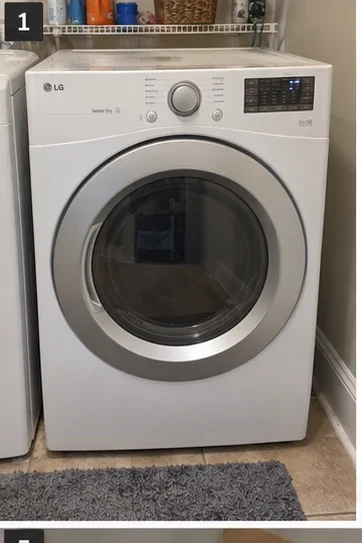
The dryer still turned on.
The drum rotated. The timer ran. The clothes moved normally through the cycle.
But there was no useful heat. This LG DLE3400W repair scenario involved an electric front-load dryer in Charlotte that appeared mechanically alive but could no longer produce the heat needed to dry a load.
A dryer can tumble normally and still have a completely separate heating problem.
What the Customer Was Seeing
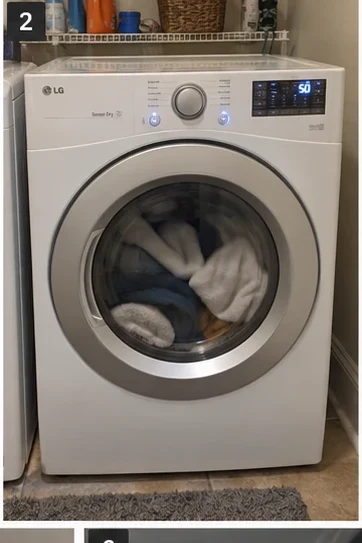
The complaint was consistent: the dryer ran through a full cycle and the clothes came out still damp. The dryer powered on without issue. The drum turned. Air moved through the machine.
What was missing was heat. Air from the dryer may have felt noticeably cooler than expected, and drying times were far beyond normal even for larger loads.
The dryer was moving the clothes. It was not delivering the heat.
"Runs but Doesn't Heat" Is Not a Diagnosis
A no-heat complaint identifies a category of problem. It does not identify which component failed. The heating system in an electric dryer involves several parts, and any one of them can produce the same symptom.
The symptom identifies the heating system. Diagnosis identifies the failed part.
Possible causes of an electric dryer that runs but does not heat include:
- Heating element failure
- Power supply issue -- partial or missing 240V circuit
- Tripped breaker or partial power
- Thermal fuse / safety device that has opened
- High-limit thermostat failure
- Thermistor providing incorrect temperature readings
- Wiring or connection issue
- Control relay or control board problem
- Restricted exhaust airflow
In this repair scenario, the heating element assembly was the confirmed failed component. But confirming that requires ruling out the other possibilities first.
Check Power Before Replacing Parts
Electric dryers require a full 240V circuit to operate the heating element correctly. The motor and drum controls run on a portion of that supply, so it is possible for a dryer to tumble normally even when the heating circuit is not receiving the expected full voltage.
A breaker that has partially tripped can leave the motor circuit energized while cutting the heating circuit. Before replacing any heating component, electrical supply and breaker condition should be considered. This is not a DIY voltage-testing step -- it is part of professional diagnosis.
Check Airflow Before Condemning the Heater
Restricted exhaust airflow is one of the most overlooked contributors to dryer heating problems. When a dryer cannot exhaust properly, heat builds up inside the machine. Safety devices are designed to open under those conditions to prevent damage or fire risk. Once a safety device opens, the heating system stops working -- even if the element itself is functional.
A dryer that makes heat but cannot move air can fail just as badly as a dryer that makes no heat at all.
Airflow checks worth including before any heating-component diagnosis:
- Lint screen cleaned and unobstructed
- Exhaust hose not kinked, crushed, or disconnected
- Duct run not excessively long or restricted
- Exterior vent hood operating and not blocked
Replacing a heater without checking airflow can leave the reason it failed untouched.
What We Found on This DLE3400W
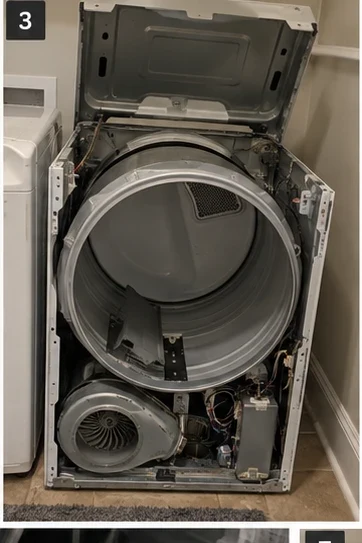
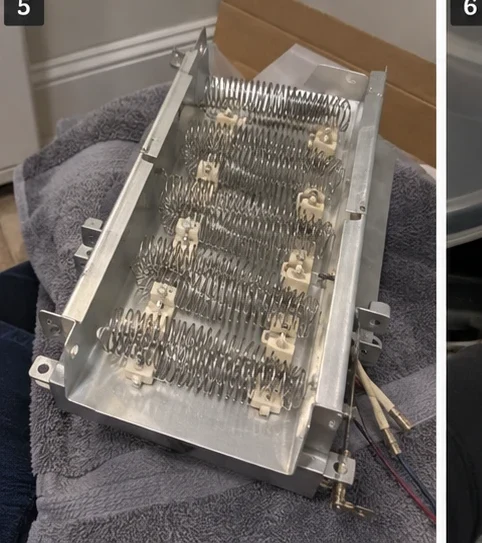
After basic power and airflow conditions were considered, diagnosis isolated the heating element assembly as the failed component on this dryer. The DLE3400W uses a resistance-coil heating assembly to convert electrical energy into heat for the drying cycle.
When the heating element assembly fails, the motor continues to run and the drum continues to turn. The airflow system keeps moving air through the machine. But the air is not being heated. That is what produces the symptom this dryer presented: mechanically normal operation with no useful heat output.
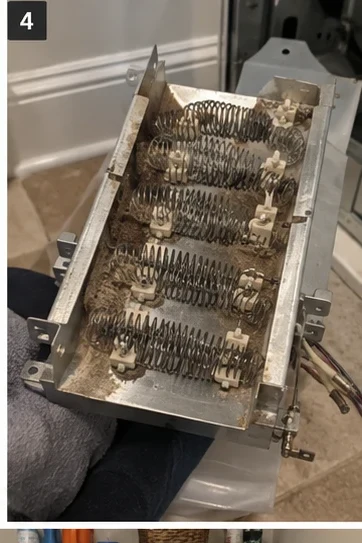
LG DLE3400W Heating Element: 5301EL1001J
5301EL1001J is a compatible LG heating element assembly listed for the DLE3400W. Its function is to convert electrical energy into heat for the drying cycle. Without a functioning heating element, the motor can still run the drum and the blower, but no heat is produced.
The reference part price used for this repair was $236.31. Retail pricing varies by supplier and availability and may be different at the time of another repair.
Heating Element vs. Thermal Fuse vs. Thermostat
These parts work in the same heating system, but they do different jobs.
Produces heat by converting electrical energy into radiant heat inside the drum area.
A one-time-use safety component that opens permanently if the dryer overheats. Once open, heat stops.
Monitors and limits the operating temperature. A failed thermostat can cause heating to stop or become inconsistent.
Provides temperature-related sensing data to the control system. Inaccurate readings can cause heating cycle problems.
These parts work in the same heating system, but they do different jobs. In this DLE3400W case, the heating element assembly was the confirmed failed component. No thermal fuse or thermostat failure was involved in this repair.
The Repair
A no-heat complaint on an electric dryer follows a logical diagnostic sequence before any component is replaced.
Why the Part Is Not the Whole Repair
The heating element assembly is one component. Getting to the correct diagnosis is the repair.
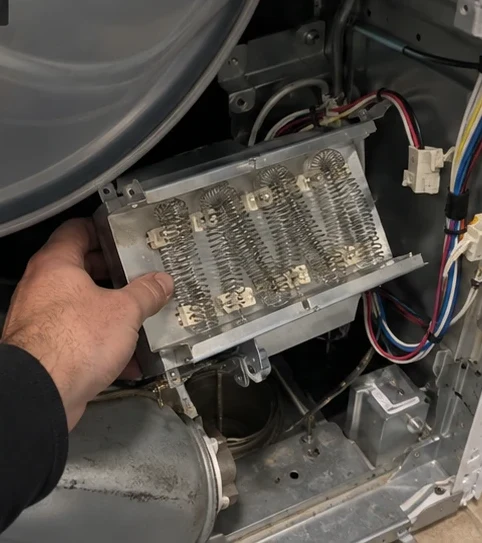
Labor on this repair covered: confirming the complaint, ruling out power supply and airflow problems, accessing the heating system, removing the failed element, installing 5301EL1001J, reassembling the dryer, and running a functional heating and airflow test.
The heater is one component. Getting to the correct diagnosis is the repair.
Could the Same Symptom Cost Less?
Yes. A dryer that runs but does not heat can sometimes have a simpler and less expensive cause than a failed heating element. A tripped breaker or partial power issue, a wiring connection problem, or a smaller safety or sensing component can produce the same no-heat symptom at a lower repair cost.
Not every dryer that runs without heat needs a heating element.
Could It Cost More?
Yes. More complex scenarios can drive a higher repair cost. Multiple failed heating-system components, damaged internal wiring, control board problems, or significant airflow damage can each increase the scope of a dryer not-heating repair. None of those conditions were present in this case.
Was This Dryer Worth Repairing?
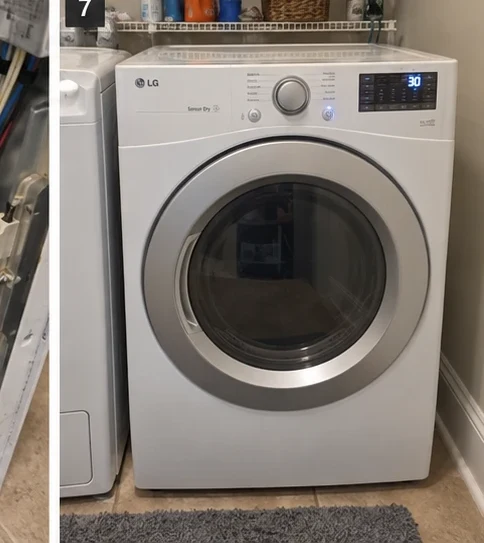
The LG DLE3400W is a modern front-load electric dryer. At $510.31 for an isolated heating element failure, repair can be a reasonable choice compared to replacing the appliance, particularly when the rest of the dryer is in good mechanical condition.
Replacement may make more sense when drum bearings or other major mechanical systems are also failing, when multiple expensive components have failed, when there is physical damage, or when the total repair cost approaches the realistic cost of a comparable replacement dryer.
This was the total for this specific repair. Another DLE3400W with the same no-heat complaint may require a different component and a different repair price.
Frequently Asked Questions
This page describes a specific LG DLE3400W repair scenario. The same symptom on another dryer may have a different cause, part requirement and repair price.